 The Bottom Line, Ministries Christian News, Articles, & Poetry
The New Testament church did not have a sound system, an auditorium with good acoustics, good seating, a good view of the platform (or maybe not even a platform), available bathrooms, or any of the niceties of 21st-century churches. It had very little, if any, special music. There is no recorded example of entertainment on the platform. There were no Sunday School rooms, no organized youth activities. There were few college-educated preachers, except Paul. There were few eloquent speakers, except Apollos (Acts 18:24). Yet the power of God was so evident upon these early preachers and churches that their enemies accused them of “turning the world upside down.” (Acts 17:6)
If any of the above criteria are part of your list, you are looking for all the wrong things. Today, we have the beautiful buildings, sophisticated sound systems, trained choirs and musicians, outstanding musical performances and drama productions, rooms and programs for every age group, trained counselors, and every possible convenience to make it easy and entertaining for people to worship. But we have minimal impact on a godless society that desperately needs God. We have everything but the power of God.
Perhaps the organized church today could be described by the words of Paul in 2 Timothy 3:5: “Having a form of godliness, but denying the power thereof.”
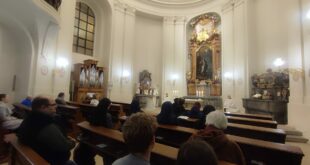
When searching for a church for you and your family, what qualities should you look for? The following are some Bible guidelines.
Is the church, the message, and the messengers faithful to Scripture?
Listen carefully to the preacher.
“To the law and to the testimony: if they speak not according to this word, it is because there is no light in them.” (Isaiah 8:20). “Despise not prophesyings. Prove all things; hold fast that which is good.” (1Thessalonians 5:20-21) Don’t despise prophesyings (preaching, teaching). PROVE all things. (Examine it. If it passes the test, hold fast to it.) “These were more noble than those in Thessalonica, in that they received the word with all readiness of mind, and searched the scriptures daily, whether those things were so.” (Acts 17:11). The Berean Christians were commended because they not only listened to the preaching but also searched the Scriptures to make sure they were hearing the truth. Listen to several messages to make sure they are consistent with the truth.
Check the church’s doctrinal statement. If it is not readily available in the church foyer or on their website, ask to see it. Is it consistent with Biblical truth?
What’s in a name? There is a tendency today to name churches anything but a denominational name. If they call themselves Baptists, Lutherans, Catholics, Methodists, Presbyterians, etc., you have a good idea of what they believe. Not all churches live up to their denominational name, but at least the name gives you some idea about the church you are visiting. The many generic names for churches today encourage a mix of many denominational beliefs in one congregation, which paves the way to confusion and splits in the future. “Can two walk together, except they be agreed?” (Amos 3:3).
Check on the life of the messenger. Does he practice what he preaches, or is his preaching just for show? Paul warns, “For such are false apostles, deceitful workers, transforming themselves into the apostles of Christ. And no marvel; for Satan himself is transformed into an angel of light. Therefore it is no great thing if his ministers also be transformed as the ministers of righteousness, whose end shall be according to their works.” (2 Corinthians 11:13-15). Peter exposed false teachers in 2 Peter 2:3: “And through covetousness shall they with feigned words make merchandise of you:” Feigned words are fabricated, pretended words. How does the messenger measure up? Is he a sincere messenger of the Lord, or is he simply there for financial or sexual advantage? Checking on these things ahead of time can save you a bundle of misery.
What is the emphasis of the church? Are they focused on the Great Commission? The focus should be on going, making disciples, baptizing, and teaching them to observe all things. (Matthew 28:19-20)
Many evangelical churches today are compromising the truth by minimizing preaching time and maximizing music and entertainment in their services. The sermons keep getting shorter, while the music and drama portions keep getting longer. The New Testament church did just the opposite. Preaching and teaching the Word should be the emphasis and the most significant portion of church services.
About 20 years ago, I read an article by a denominational leader lamenting the fact that their youth were not grounded in the truth and were leaving the church after high school graduation. He concluded that they had concentrated on entertaining young people, but had failed to teach them the Word. Observing that denomination since then, it appears they did not heed the writer’s advice. They are continuing in the same way as before.
Another indicator: How often do they hold services? Over the past few years, churches have increasingly dropped the Wednesday and Sunday night services. These are usually replaced by small group meetings at other places than the church. If a visitor wants to visit the church, their only opportunity is Sunday morning. In my opinion, this marks the beginning of a downward slide toward the attitude that the church is not really important. If I attend on Sunday morning, I’ve fulfilled my obligations. The early church met daily. Is three times a week too much to ask?
Searching for a church: the “What’s in it for me?” attitude.
Many times through the years, I have heard parents approach the church search function by asking, “What’s in it for me or for my children?” Then they look for a church with the best or biggest children’s and youth programs. Really? Is that what’s best for your children? Shouldn’t the approach be, Where can we and our children serve the Lord best? Where is the best opportunity to both learn and serve? That opportunity could be in either a large or small church.
As a teenager many years ago, my parents were faced with a significant choice. The denominational church we were attending took a turn toward liberalism. The pastor began teaching that Genesis is a myth. My dad decided we would no longer support that church. We started searching for a church. In North Wisconsin at that time, there were no large churches to choose from. All of the nearby churches were liberal Protestant or Catholic. We traveled 30 to 40 miles each Sunday to visit conservative churches.
Then, in our senior year of high school, a doctrinally sound independent Baptist church plant began in our town. It was very small with just a couple of families to start. Since there was no pianist and I was the only one who could play, I became the church pianist. As the only teenagers, my sister and I were tasked with building the youth group. This small church was our training ground for future Christian service. Before our senior year was over, we had added several other teenagers to our group. And I was able to help with the entire music program. We didn’t feel burdened. We were privileged. And God blessed.
So, as you search for a church, where can you serve best? Then make yourself available.
Above all, bathe this entire process in prayer and the study of the Word.
This is the last of my Christian family articles. To see the previous eight articles, go to this page.





Great job Dale with this important series concerning families. Thank you for your dedication!
God Bless you and may He continue to guide you with His wisdom on future stories and missions.
excellent series dale